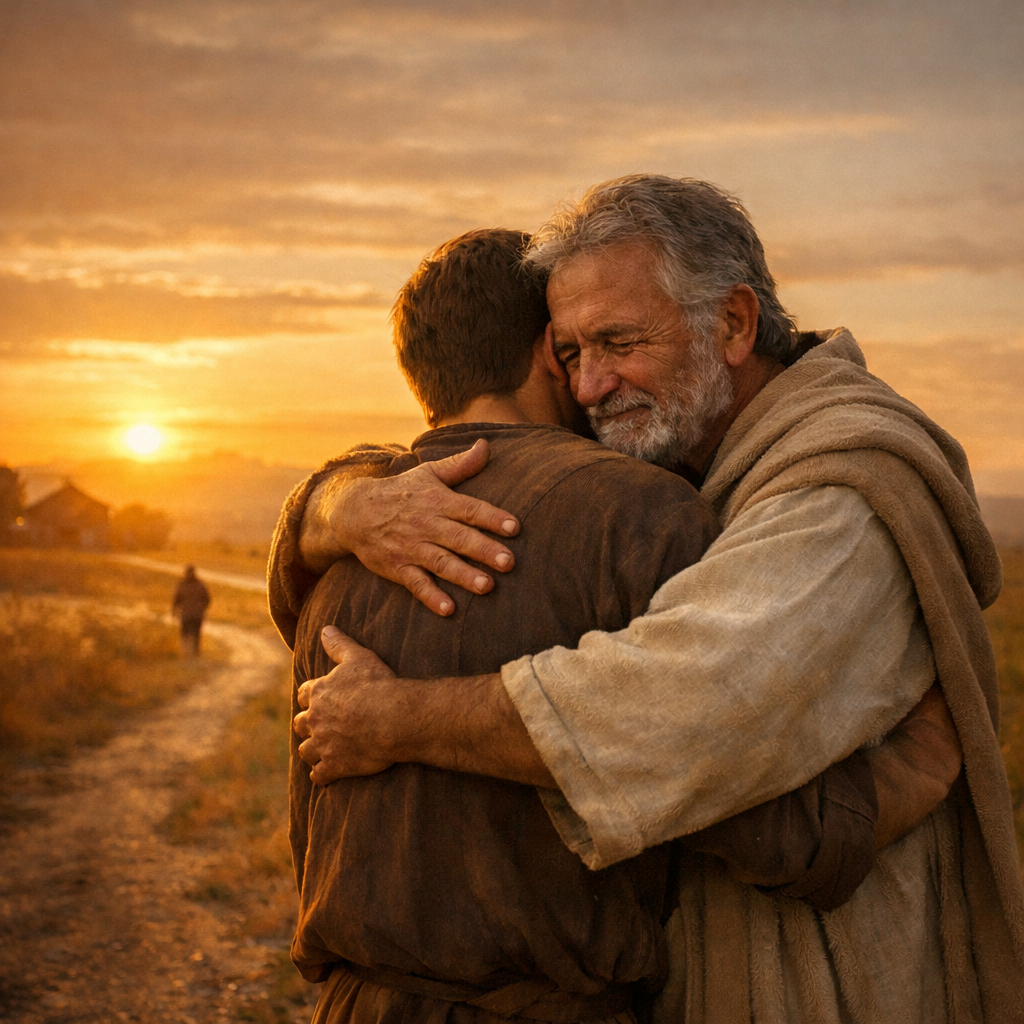
“𝘽𝙪𝙩 𝙬𝙝𝙞𝙡𝙚 𝙝𝙚 𝙬𝙖𝙨 𝙨𝙩𝙞𝙡𝙡 𝙖 𝙡𝙤𝙣𝙜 𝙬𝙖𝙮 𝙤𝙛𝙛, 𝙝𝙞𝙨 𝙛𝙖𝙩𝙝𝙚𝙧 𝙨𝙖𝙬 𝙝𝙞𝙢 𝙖𝙣𝙙 𝙬𝙖𝙨 𝙛𝙞𝙡𝙡𝙚𝙙 𝙬𝙞𝙩𝙝 𝙘𝙤𝙢𝙥𝙖𝙨𝙨𝙞𝙤𝙣 𝙛𝙤𝙧 𝙝𝙞𝙢; 𝙝𝙚 𝙧𝙖𝙣 𝙩𝙤 𝙝𝙞𝙨 𝙨𝙤𝙣, 𝙩𝙝𝙧𝙚𝙬 𝙝𝙞𝙨 𝙖𝙧𝙢𝙨 𝙖𝙧𝙤𝙪𝙣𝙙 𝙝𝙞𝙢 𝙖𝙣𝙙 𝙠𝙞𝙨𝙨𝙚𝙙 𝙝𝙞𝙢.” 𝙇𝙪𝙠𝙚 𝟏𝟓:𝟐𝟎
I don’t really remember when I first heard the Parable of the Prodigal Son, but it captivates me every time. Each reading finds me squarely in the story, not just in one character but in all three.
I think that’s true for most of us, especially those in this final chapter of life often called the fourth quarter.
The seasons of life come into sharper focus now, seen through a lens we didn’t have in earlier chapters.
Looking back, there were years when I was unmistakably the younger son. Times when my anger, grief, or disappointment led me to pull away from God, from others, and from being my best self.
So I would run—not always physically, but emotionally and spiritually. When I finally came to my senses, I often carried shame, wondering whether I deserved to be loved and welcomed back.
There were also times when I behaved like the older son. Dutiful, responsible, doing all the right things, yet quietly keeping score. Resentful when others received grace I felt hadn’t been extended to me.
I see now how easily pride can disguise itself as self-righteousness and can harden the heart.
But now, in this season of life, I feel a different calling—perhaps the deepest yet: to become the Father in the parable.
The Father doesn’t lecture, replay old arguments, or demand explanations before offering his unconditional love. He simply runs toward his loved ones with open arms.
I’ve learned that the truest measure of life isn’t the “resume virtues” David Brooks describes in his book “The Road to Character”—all the titles, promotions, and accomplishments we build in earlier chapters.
What matters most in this final quarter is the legacy of the relationships I leave behind, what he calls the “eulogy virtues.” How did I love? How did I welcome people home? How did I show up?
My aspiration is no longer to be right or even understood—but to be loving. To welcome others without judgment, without conditions, without rewriting yesterday’s battles. To love generously, especially when relationships are complicated.
Every human life includes many moments of feeling lost, of being resentful, but also of learning to love more like God loves.
In the end, God hopes each of us can welcome one another home.
𝐒𝐨 𝐇𝐨𝐰 𝐀𝐛𝐨𝐮𝐭 𝐘𝐨𝐮?
*When have you been the younger son? The older son? The Father?
*Is there someone in your life you need to welcome home?
Wishing my clients, colleagues, fellow coaches, and friends the gift of God’s abundant love, Dr. K